
Compliance readiness
 Start a project
Inside Hide Fashion / Noida, India
Follow the leather from the lot through cutting, stitching and finishing, and the three quality gates every piece has to pass.
Follow the making
Begin with the leather lot. Follow the material through matching, cutting, preparation, stitching and finishing, then explore the three quality gates.
Each department shows a different part of the work. You can follow the full journey or go straight to the stage that matters to your order.
Stop 01 / Material preparation
Where does the making begin?
The visit starts with the leather lot system and initial matching. Leather is identified and made ready for the cutting zone. These views show the hides and the material area before the next operation.
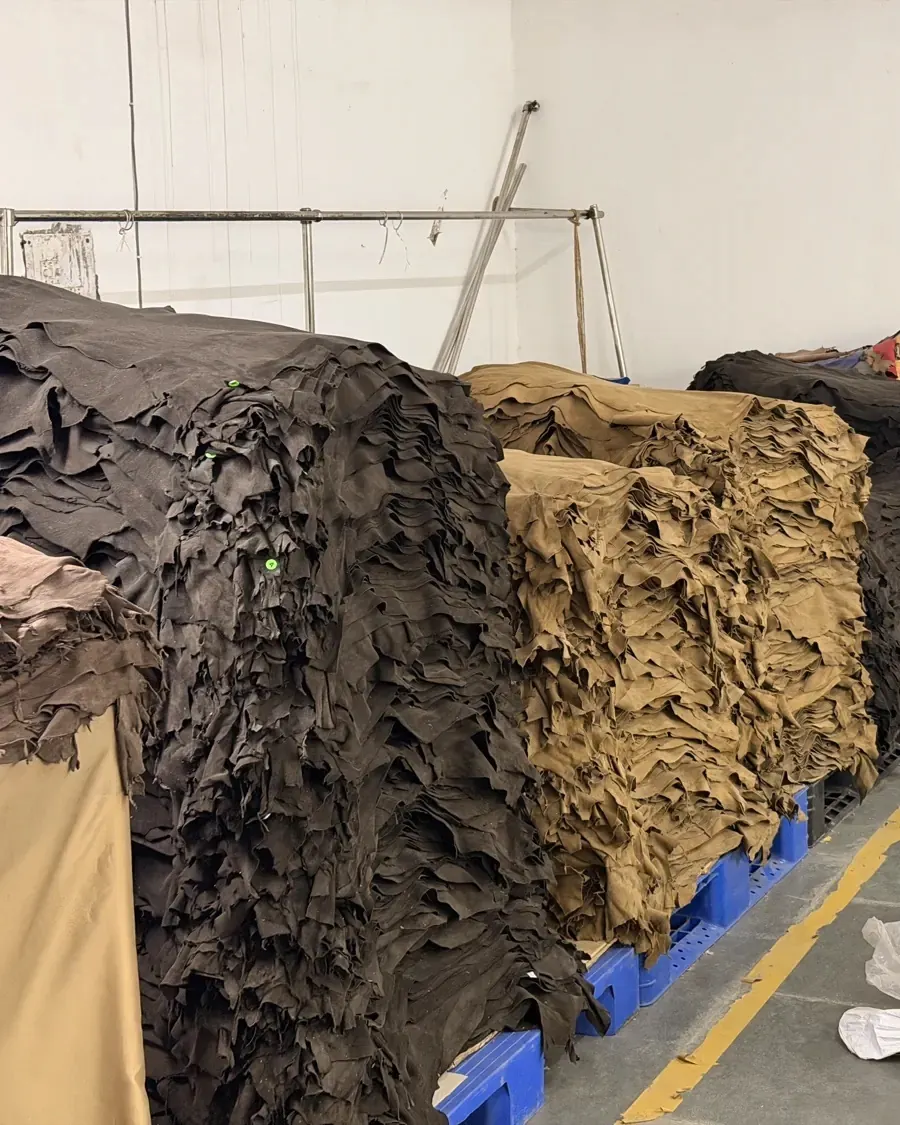
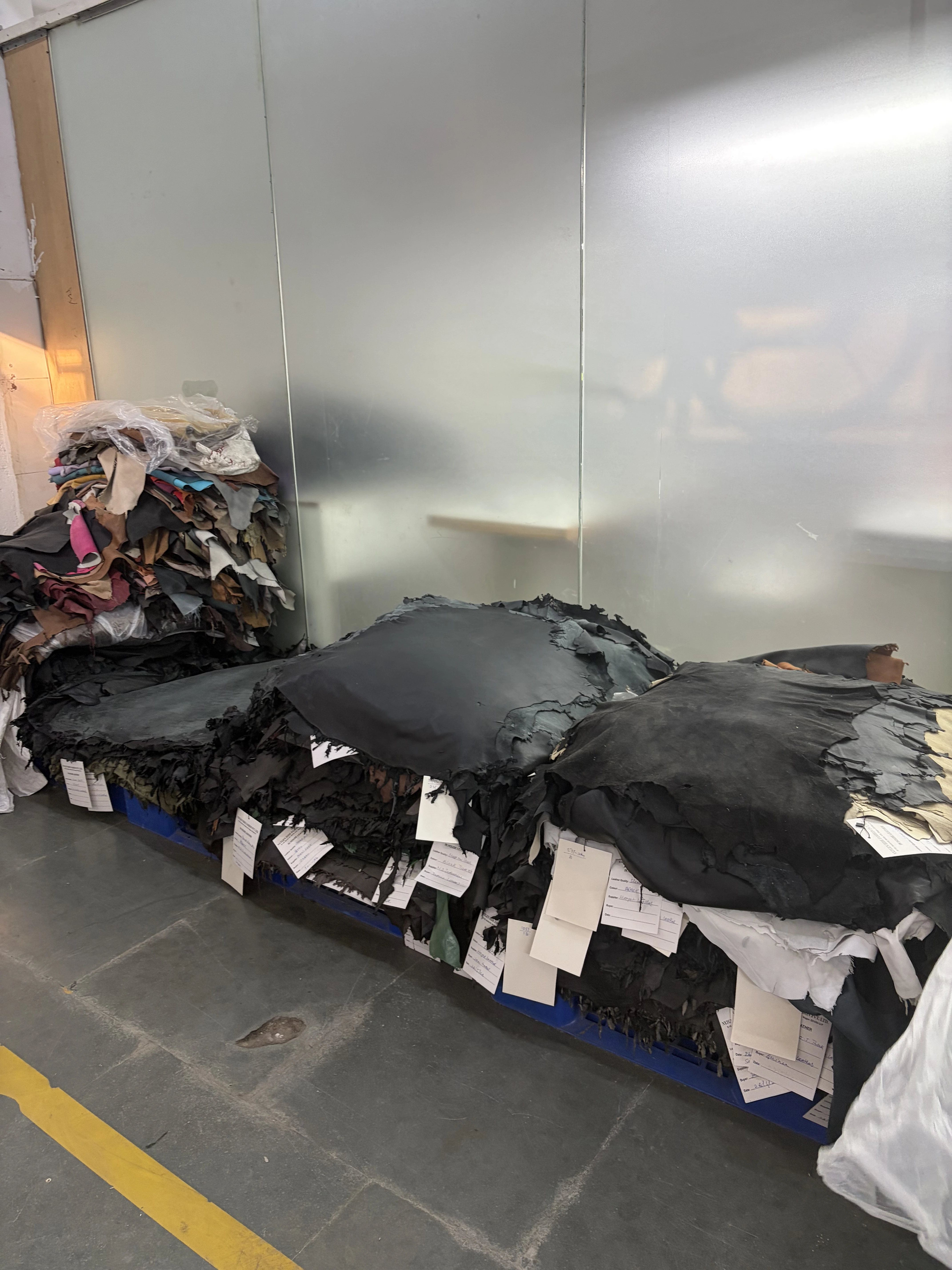
The leather moves to the cutting zone for matching and allocation.
Stop 02 / Material preparation
How is the leather prepared before it is cut?
In the cutting zone, leather is matched before it is shared with the cutters. The hides are then marked and cut. From the matching table to the cut components, these photographs show different views of the work.
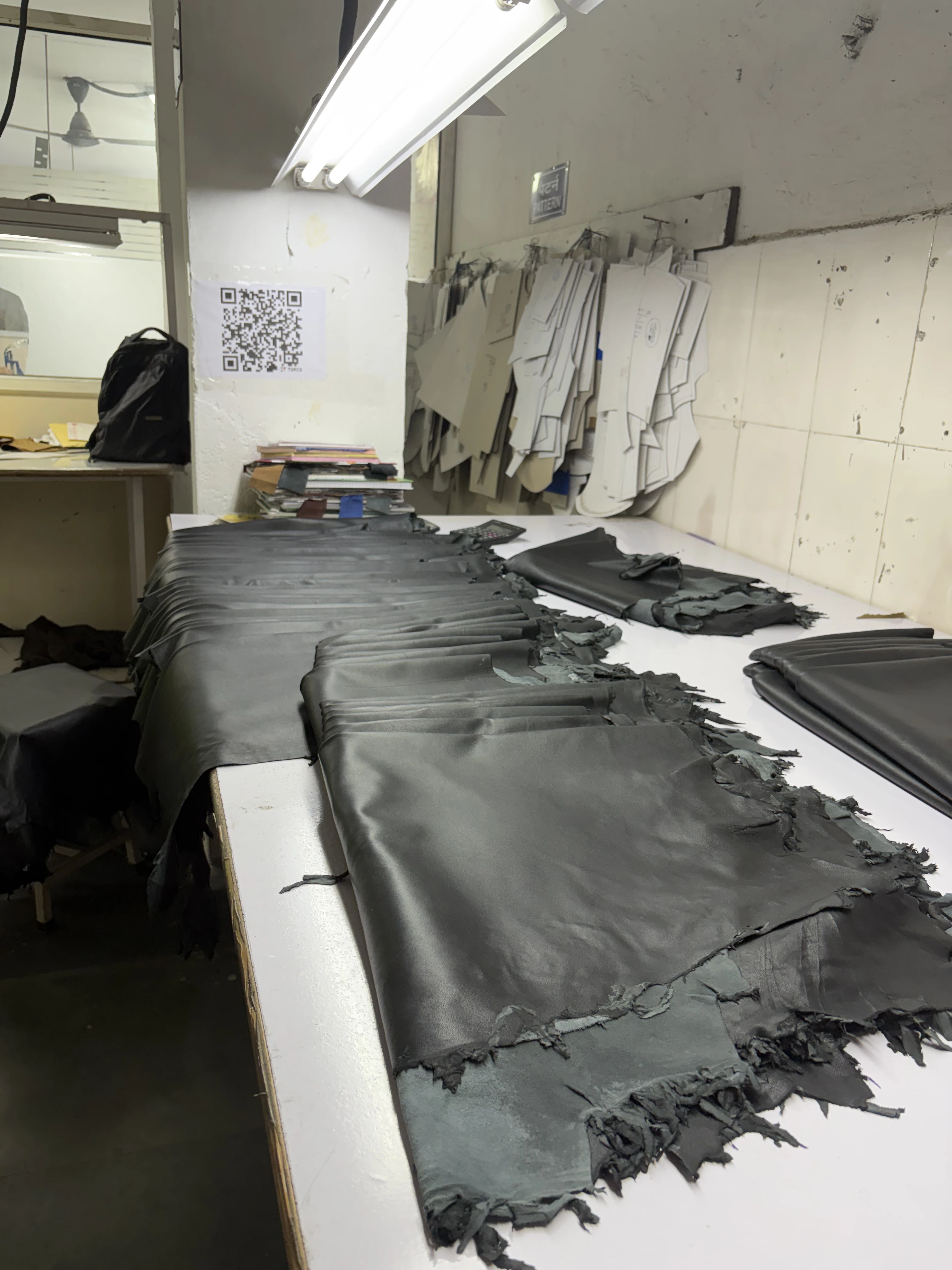
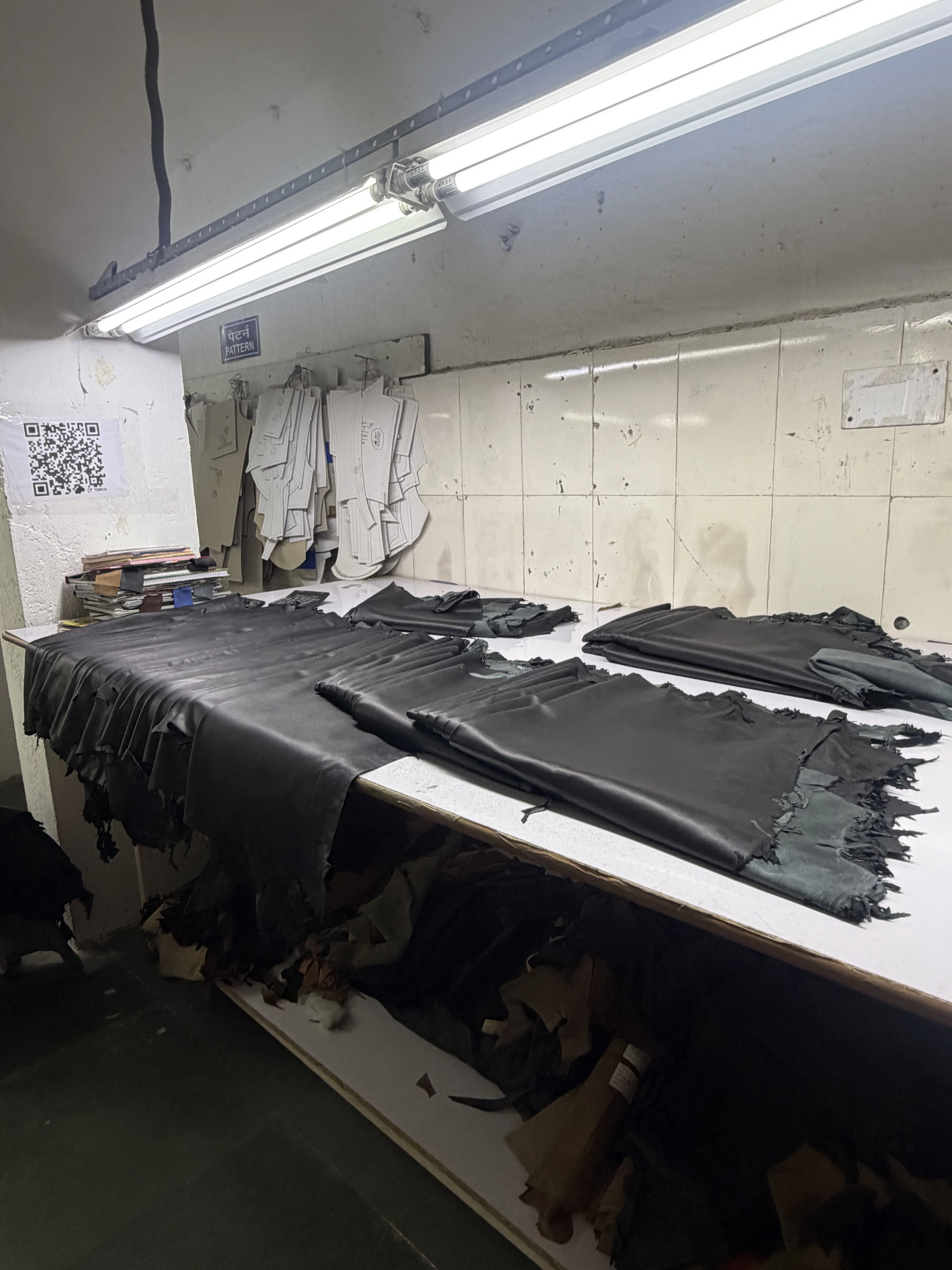
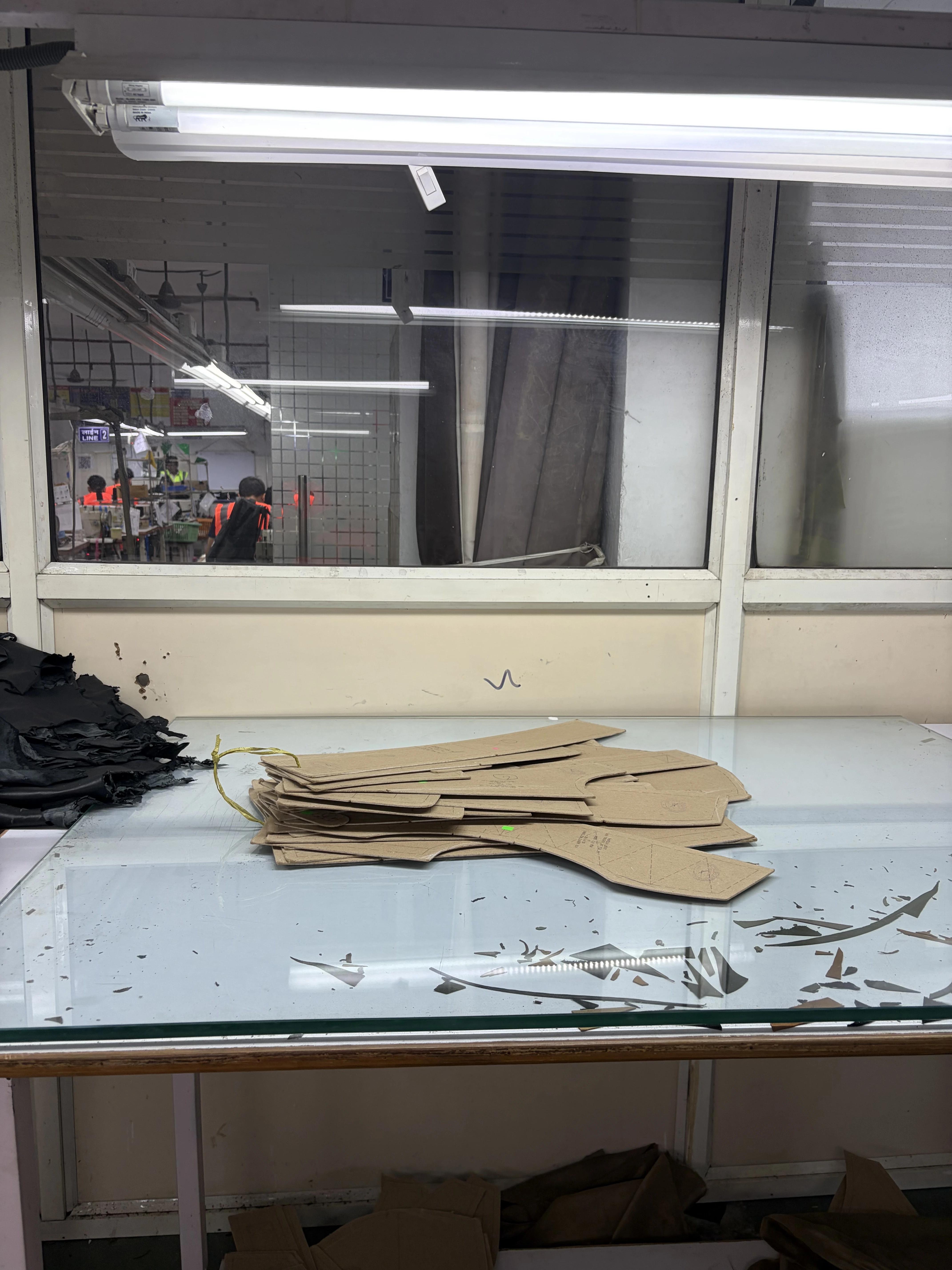
The cut pieces move into the production store.
Stop 03 / Assembly & finishing
How are the pieces prepared for stitching?
After the store, the cut leather pieces go through fusing and pasting. This workstation shows the preparation operation before the pieces move to the stitching floor.
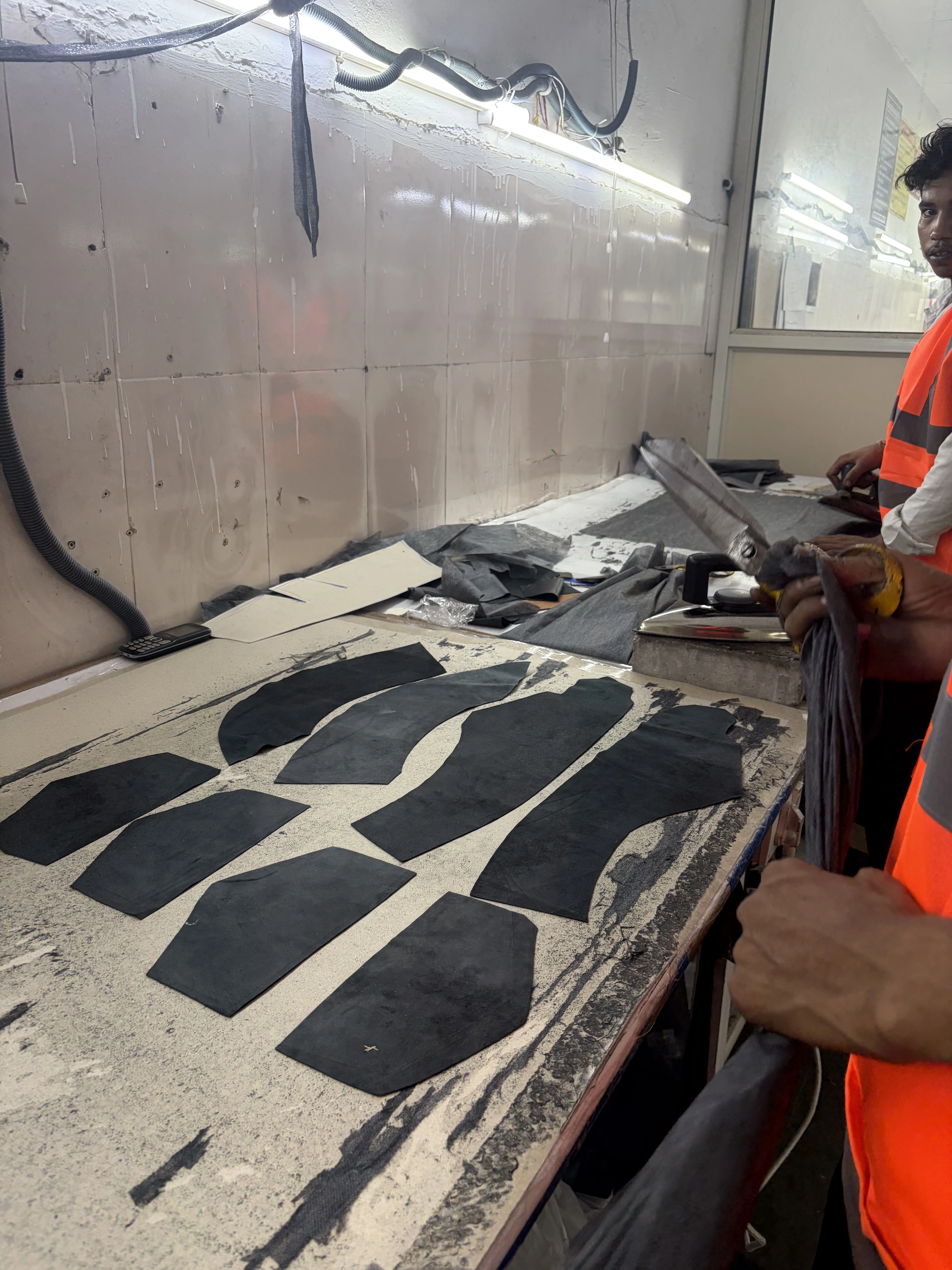
The prepared pieces move to stitching.
Stop 04 / Assembly & finishing
How does the product come together?
The prepared pieces move onto the stitching floor. These views take you along the production area, showing the workstations, machines and people involved in assembly.
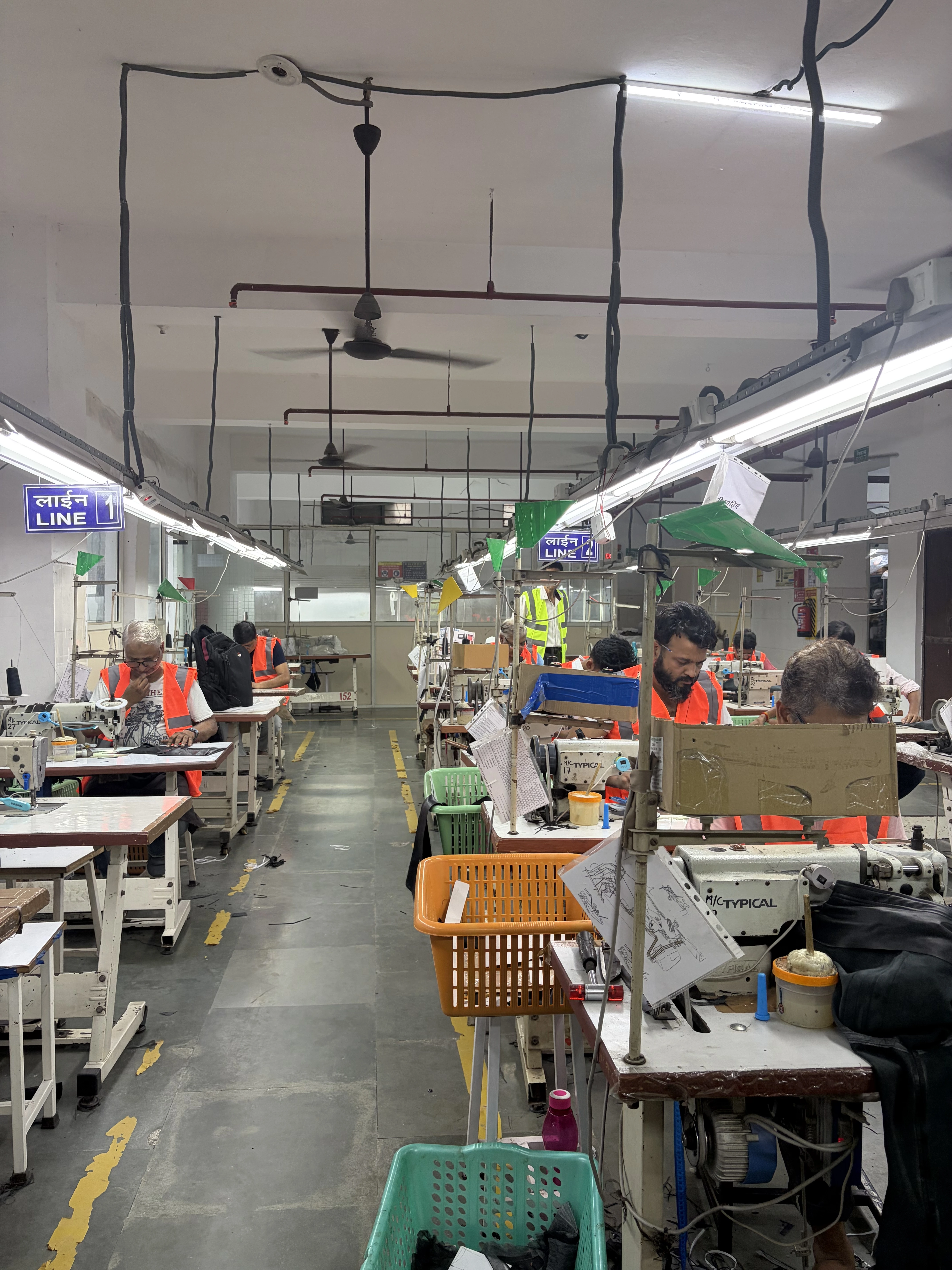
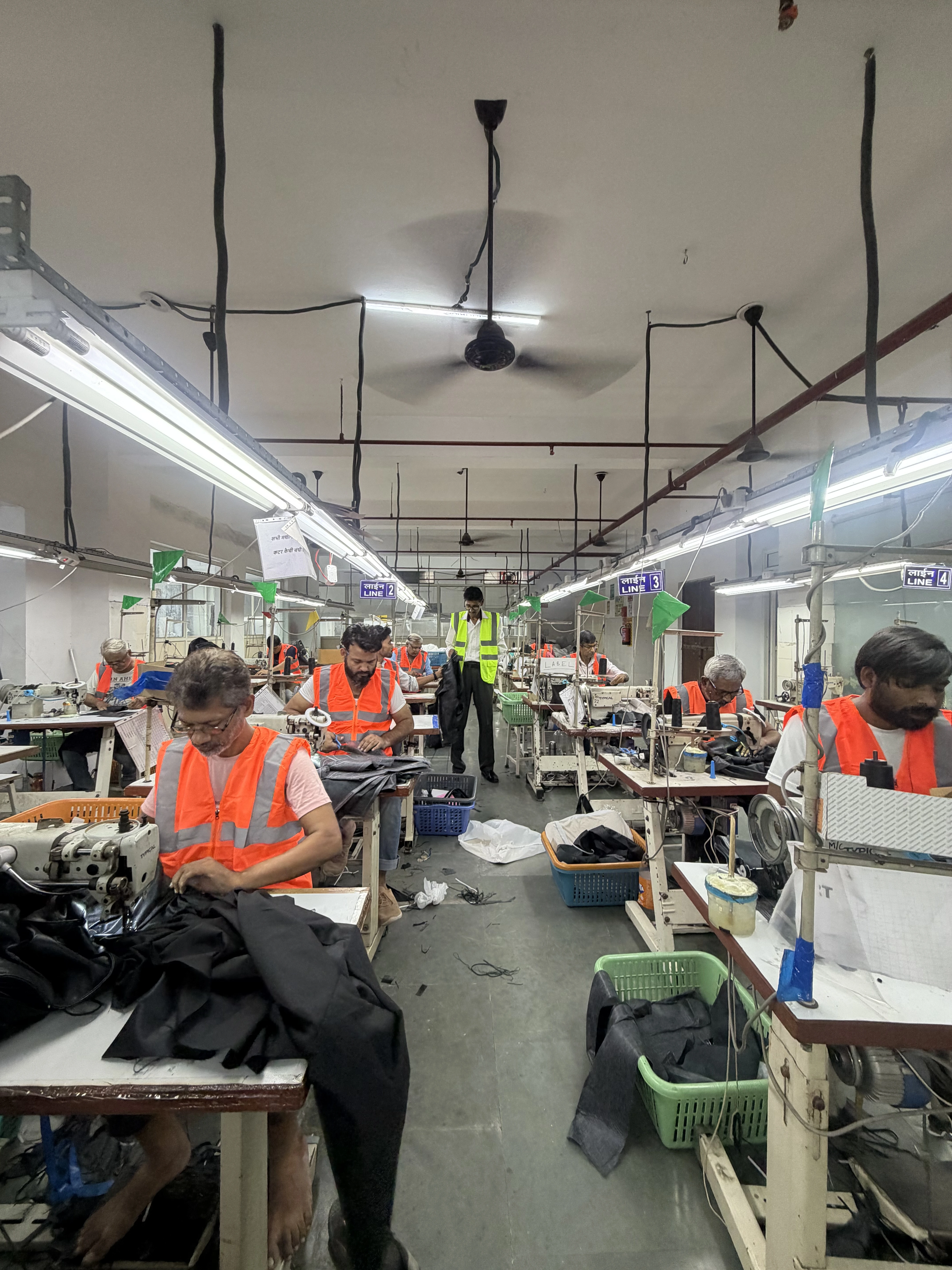
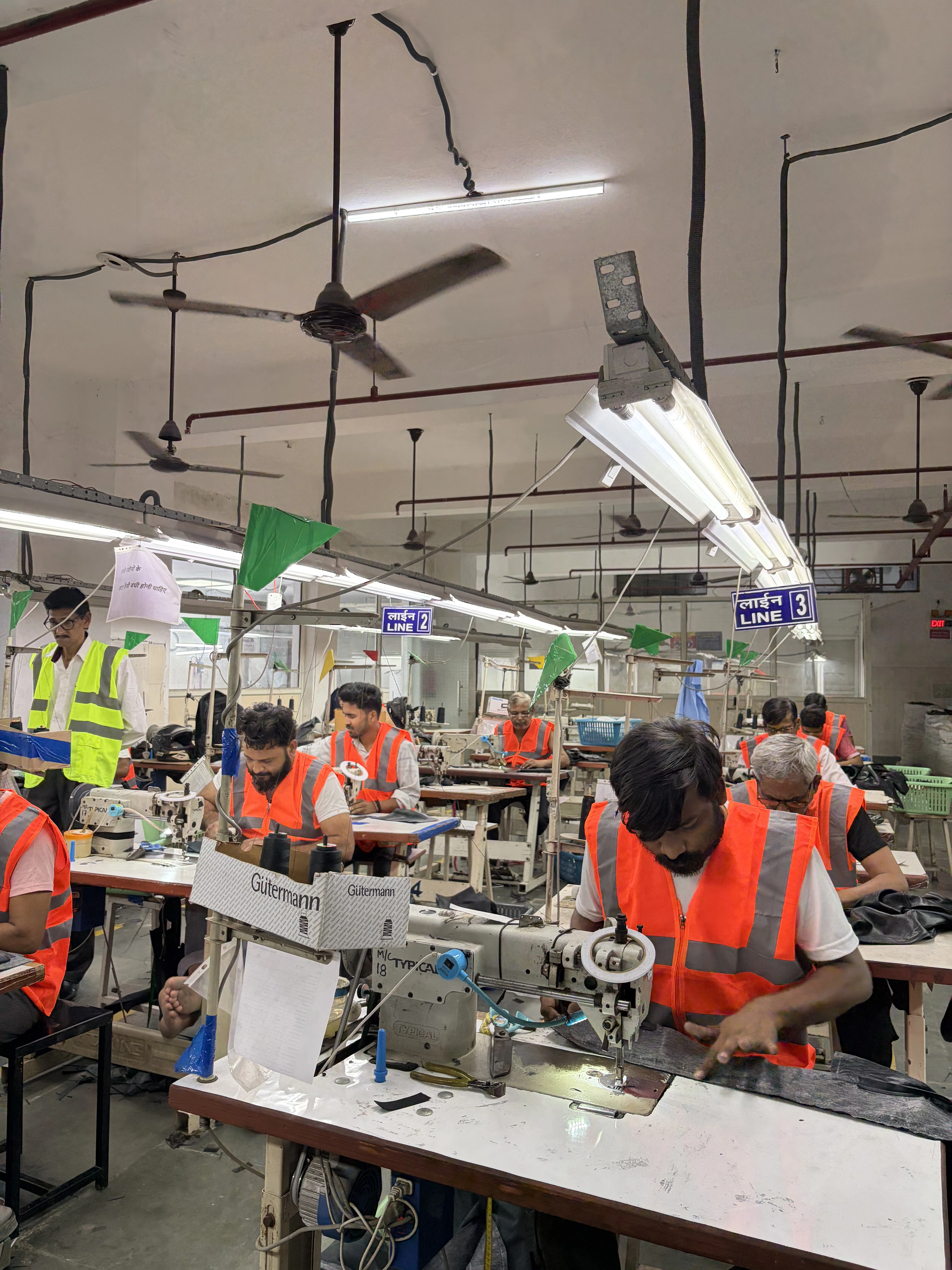
The stitched product moves to finishing.
Stop 05 / Assembly & finishing
What happens before the quality checks?
After stitching, the product goes through finishing. The finishing tables are the handoff between the assembled product and the quality-control stages that follow.
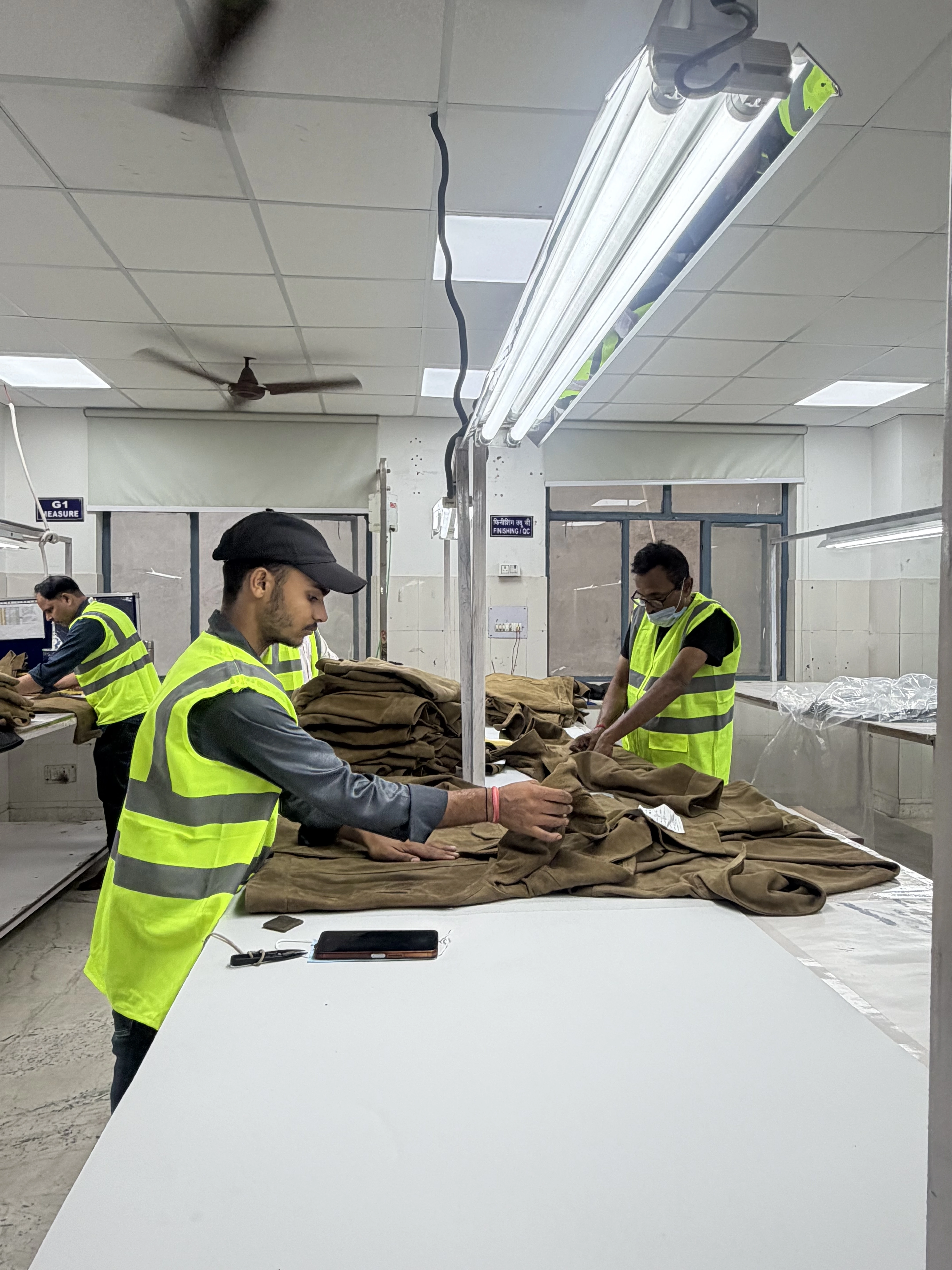
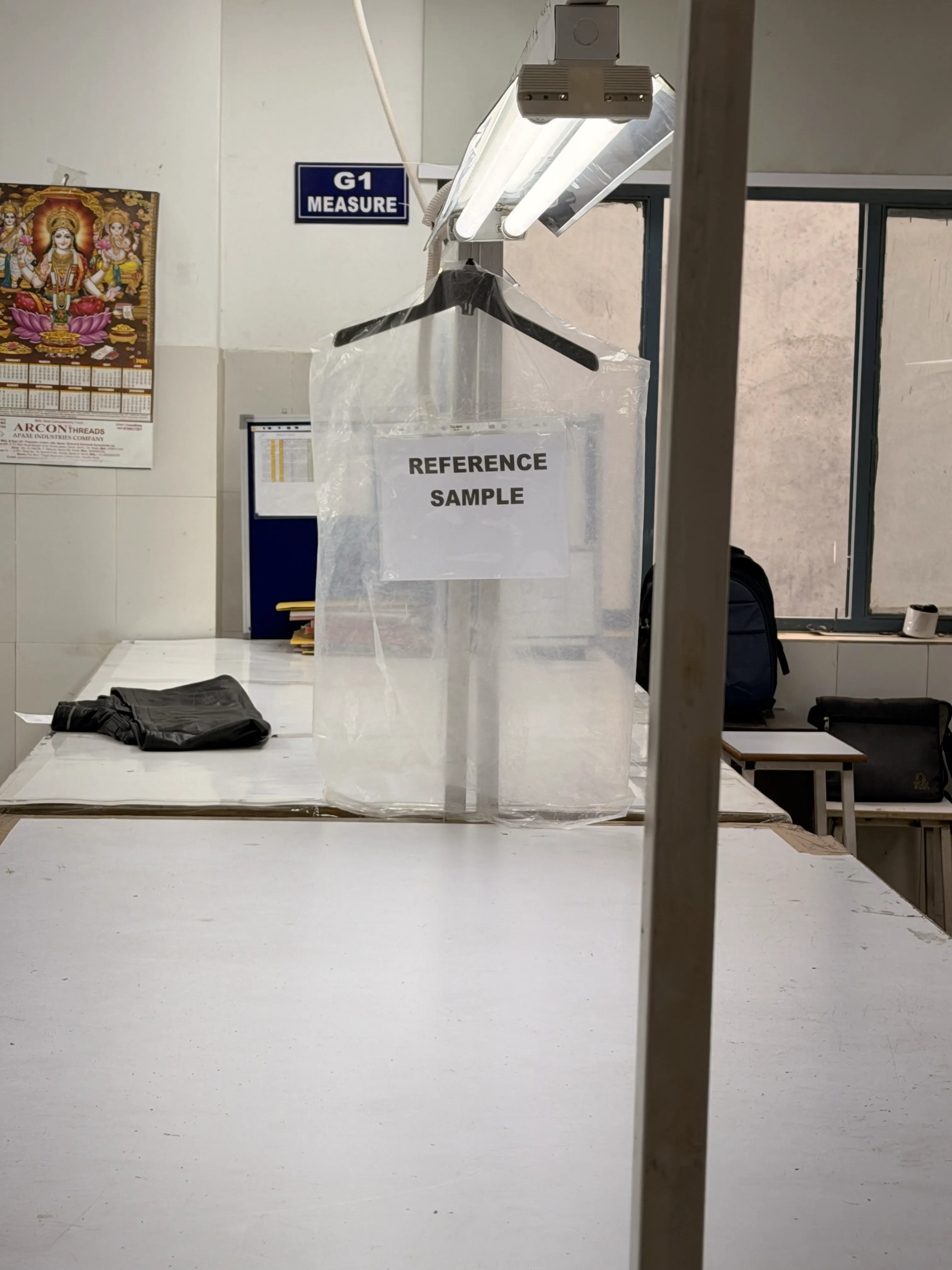
The finished product enters G1 for measurement checks.
Stop 06 / Quality gates
Does the product meet the required measurements?
G1 checks measurements against the approved product specification. The measurement station is a separate step in the quality process, with an approve, repair or reject decision for the item.
Explore the decisions at G1
Choose an example to understand what happens next.
Green / Approve: the item meets this gate’s requirements and can follow the approved route.
Amber / Repair: the issue needs correction and reinspection before approval.
Red / Reject: the item does not qualify for the approved route. Its handling follows the factory’s rejection procedure.
The approved route continues to G2. Items needing correction follow the factory’s reinspection procedure.
Stop 07 / Quality gates
Does the workmanship meet the agreed requirements?
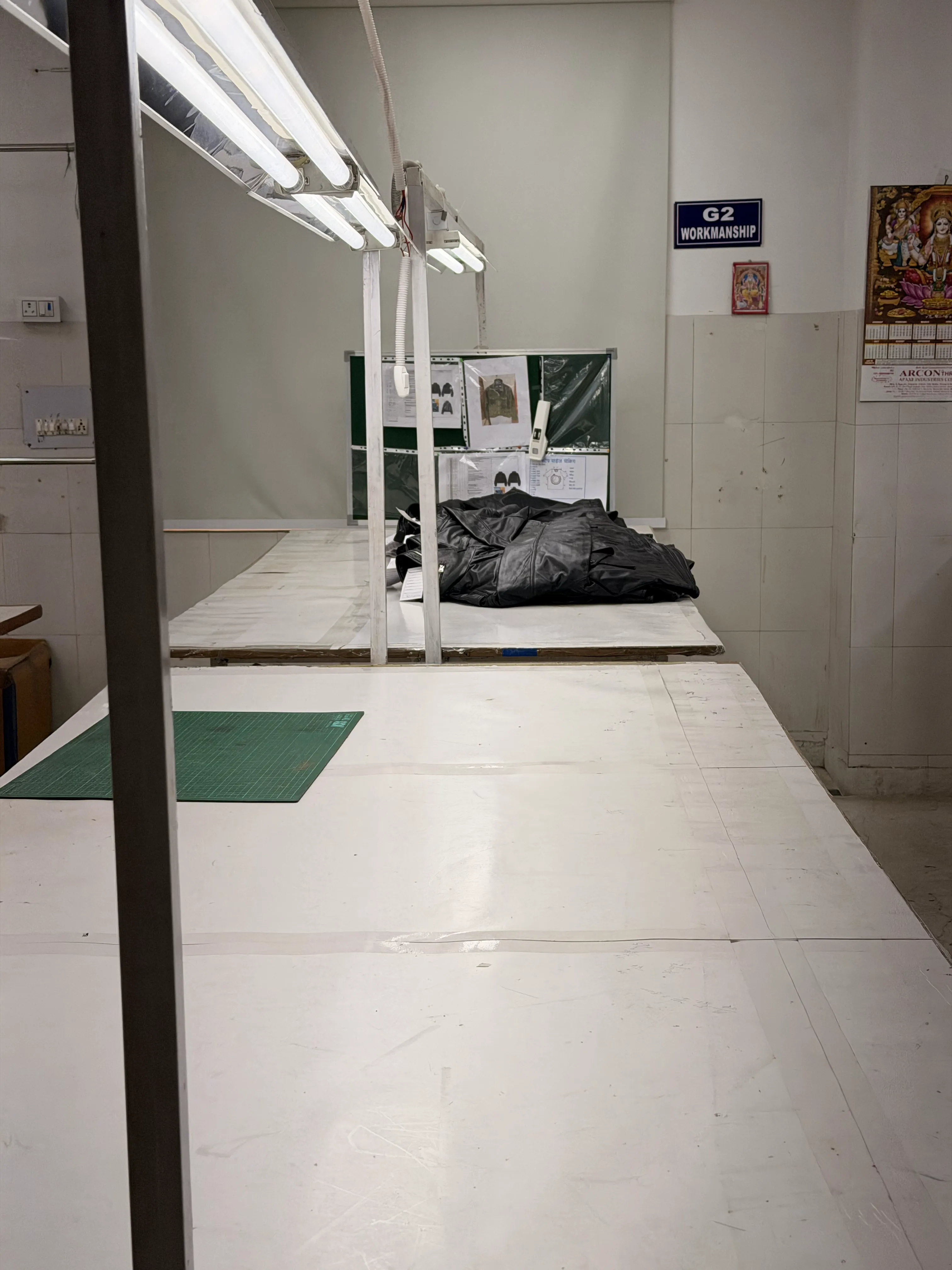
G2 checks workmanship against the agreed product requirements. The station and its inspection work show the next quality gate after measurement.
Explore the decisions at G2
Choose an example to understand what happens next.
Green / Approve: the item meets this gate’s requirements and can follow the approved route.
Amber / Repair: the issue needs correction and reinspection before approval.
Red / Reject: the item does not qualify for the approved route. Its handling follows the factory’s rejection procedure.
The approved route continues to the combined final check at G3.
Stop 08 / Quality gates
Are measurement and workmanship ready for final approval?
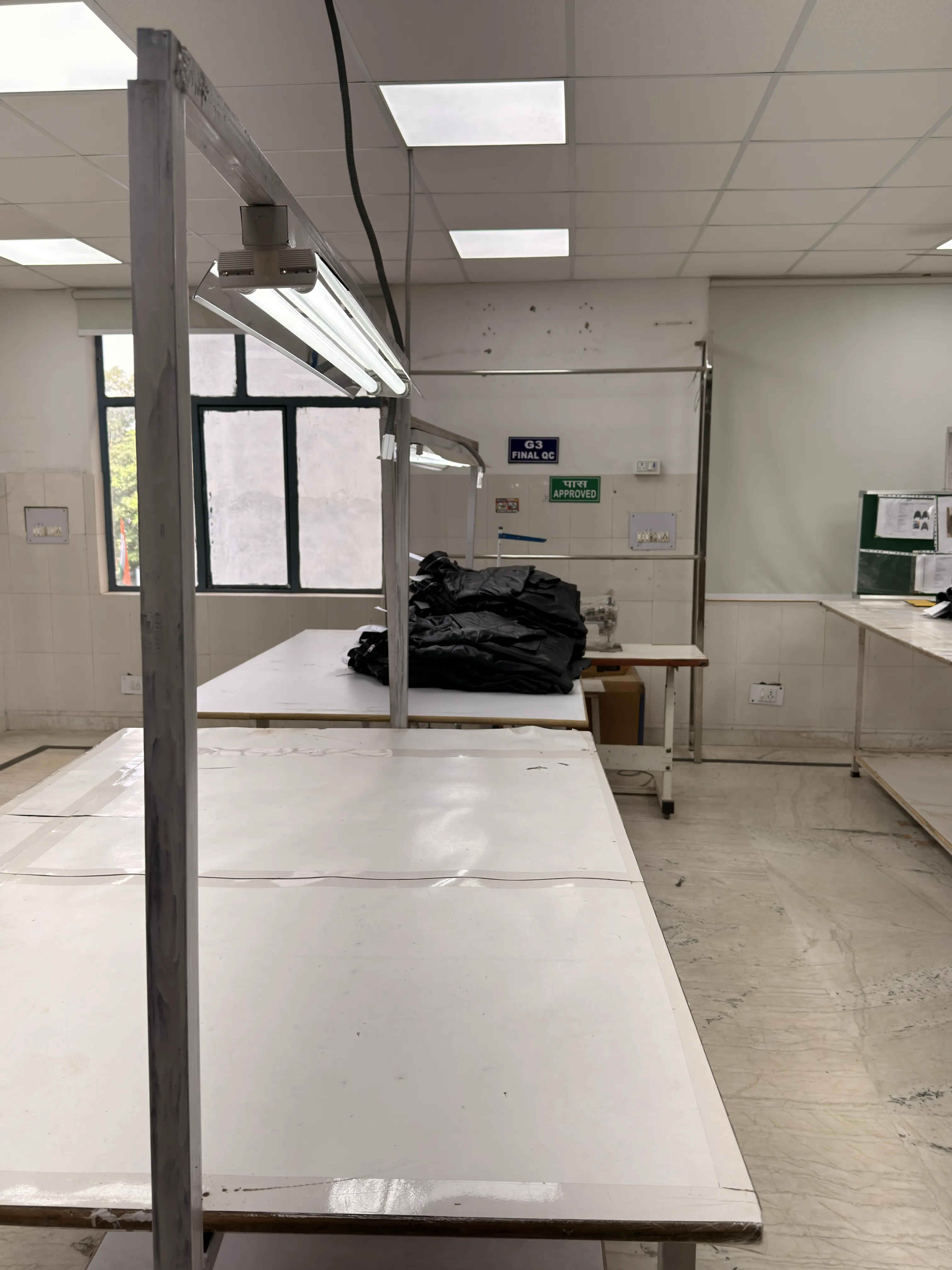
G3 is the final combined check of measurements and workmanship. Buyer-arranged third-party inspection can take place at this stage where agreed. The station photograph shows the G3 Final QC sign and its approved area.
Explore the decisions at G3
Choose an example to understand what happens next.
Green / Approve: the item meets this gate’s requirements and can follow the approved route.
Amber / Repair: the issue needs correction and reinspection before approval.
Red / Reject: the item does not qualify for the approved route. Its handling follows the factory’s rejection procedure.
Discuss the product specification and inspection arrangements for your order.
The quality system
50+ checklist points across the process. Measurement, workmanship and final inspection form part of the factory’s quality-control process.
Every gate can approve, request repair or reject an item. Repair requires correction and reinspection before approval. At G3, measurement and workmanship come together for the final combined check.
Your approved product specification and agreed inspection requirements guide the checks. Buyer-arranged third-party inspection can take place at G3 where agreed.
Pattern work connects a product brief with its construction. These views show the development area alongside the production route. Share your tech pack, sample or construction requirements to discuss the development approach.
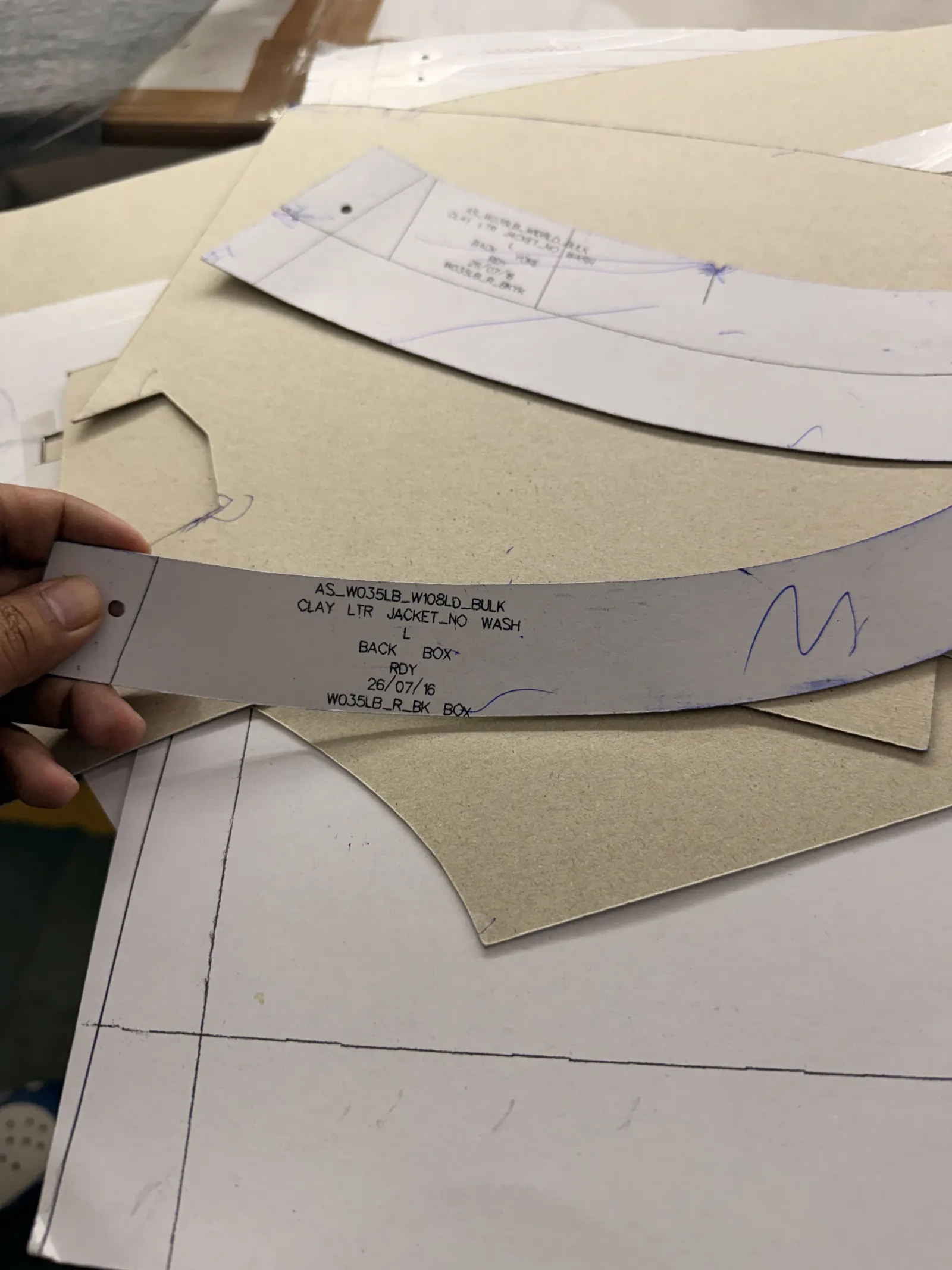
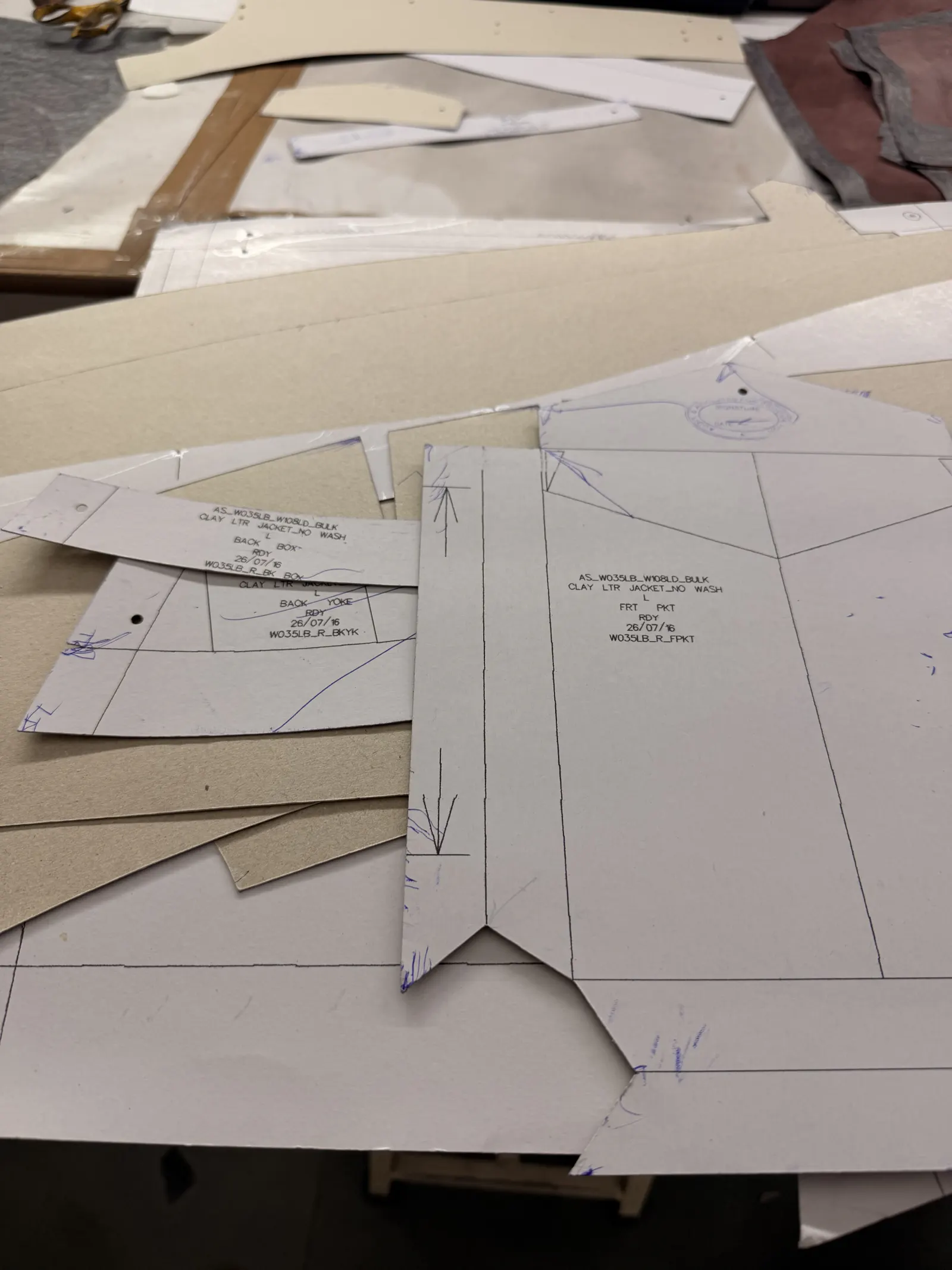
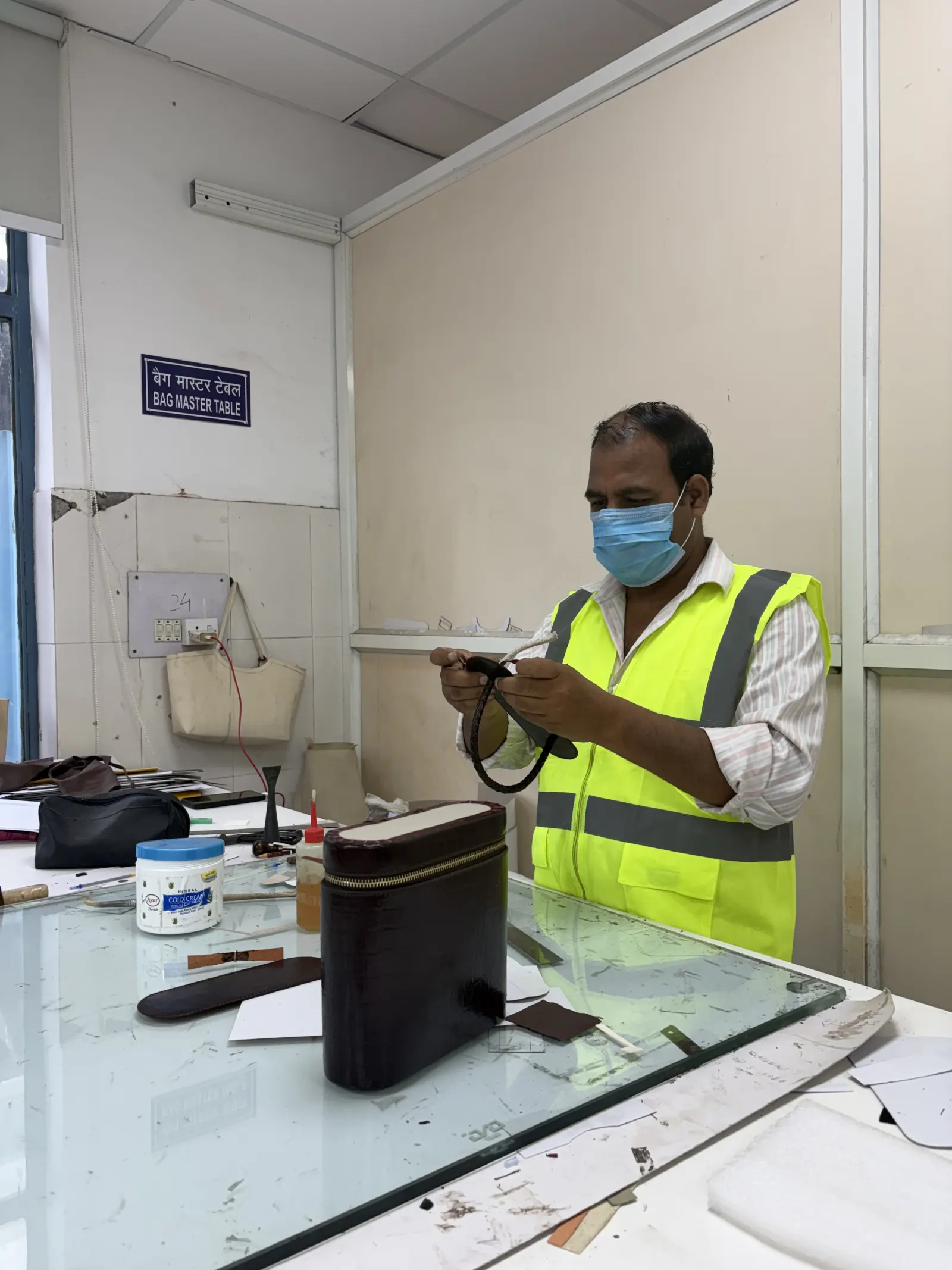
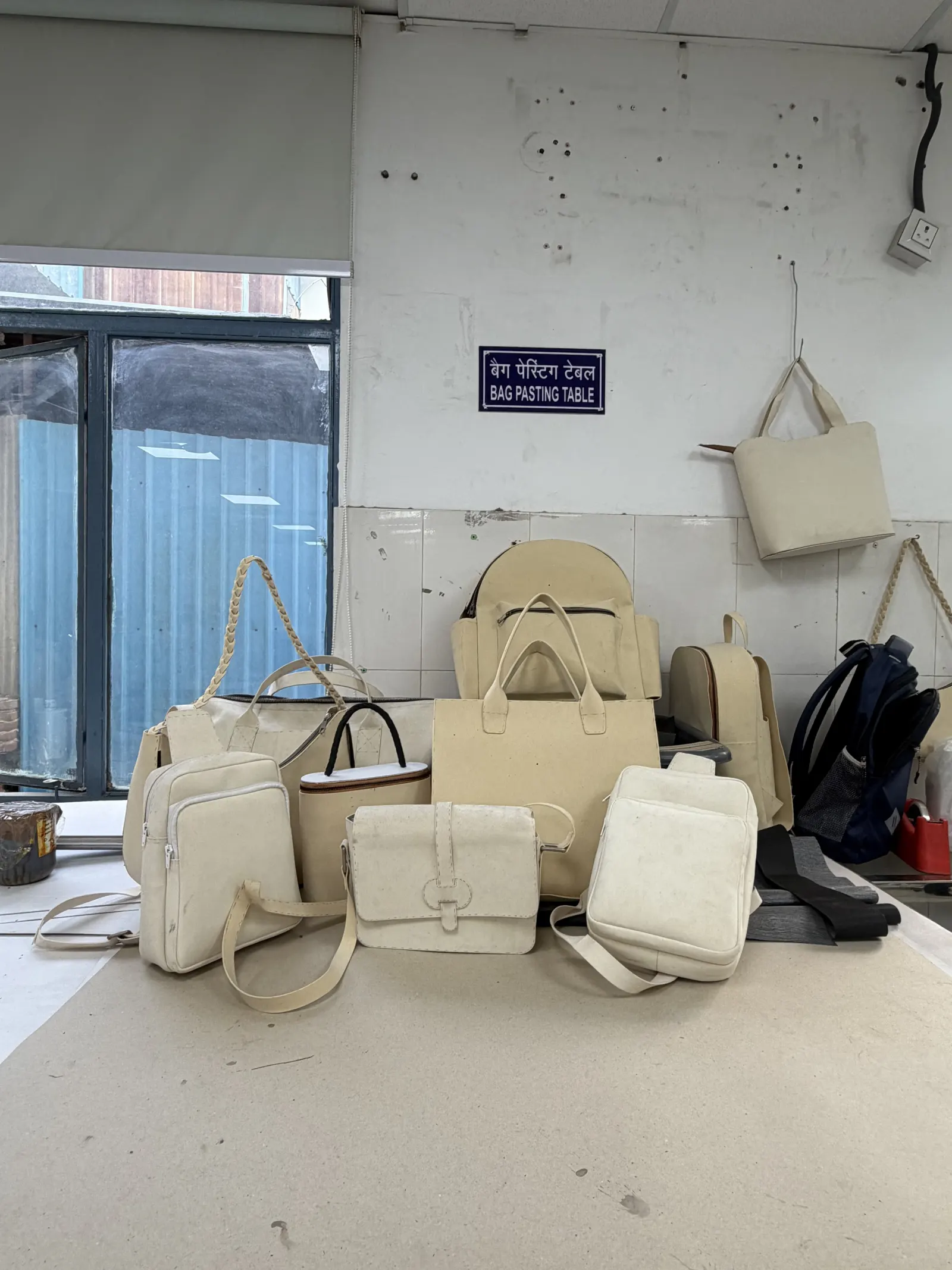
The factory visit also includes the bag development area. These workbench views show another part of the facility, alongside the garment-production journey above.
Factory standards
Review our factory standards alongside your product requirements. Readiness and an audit are different milestones; each status is shown below.
Discuss the relevant audit scope and documentation with our team.
Compliance readiness

Social compliance audit
Labour standards, health and safety, environment, and business ethics.
Before your visit
The visit follows the leather lot through matching and cutting, the production store, fusing and pasting, stitching, finishing and three QC gates. Additional photographs show pattern development and bag development.
G1 checks measurements. G2 checks workmanship. G3 combines measurement and workmanship for the final QC process. Each gate can approve, request repair or reject an item. The process includes 50+ checklist points overall.
Buyer-arranged third-party inspection can take place at G3 where agreed. Discuss the inspection scope and arrangements with the factory team for your order.
Use the live factory visit link to arrange a conversation, or send a brief through Start a project. Include your product requirements and the materials, construction or inspection questions you would like to discuss.
Continue the conversation
Share your product brief, or arrange a conversation with the factory team about the materials, construction and inspection requirements.